Monthly Archives: October 2010

Gazetteer

The Ayrshire Bird Report names the places where sightings took place. Often these are the hot-spots listed in the Where to Watch Birds in Ayrshire section. However, for many records the place might not be so well known. The table below lists the places mentioned in the 1999 Bird Report (a typical year, I hope) together with the OS grid reference to identify the location. The table is sorted alphabetically, but as there are over 160 entries, it might be more efficient to use your browser’s Find facility. The following OS Landranger 1:50,000 scale maps cover this area:

  1. 63: Firth of Clyde area
  2. 64: Glasgow and surrounding area
  3. 70: Ayr, Kilmarnock and surrounding area
  4. 71: Lanark and surrounding area
  5. 76: Girvan, Ballantrae and Barrhill
  6. 77: Dalmellington and New Galloway
Place Name Grid Reference OS Map
Ailsa Craig NX019998 76
Airds Moss NS600240 71
Alloway (Ayr) NS334185 70
Ardeer NS280410 70
Ardmillan NX168946 76
Ardneil Bay NS185484 63
Ardrossan NS225420 63, 70
Ashgrove Loch NS274443 70
Auchincruive NS385235 70
Auchinharvie (Stevenston) NS263415 70
Ayr Gorge NS463256 70
Ayr Harbour NS333227 70
Balcreuchan Port NX100878 76
Balkenna NS198043 76
Ballantrae NX083827 76
Baltersan NS284086 76
Bankhead NS486374 71
Barassie NS322314 70
Barcraigs Reservoir NS394574 63
Barcully NS316048 77
Bargany NS244003 77
Barnshean Loch NS380114 70
Barskimming NS483245 70
Beith NS350540 63
Bennane Head NX091867 76
Bennane Lea NX092860 76
Black Loch NS591162 71
Blackcraig Hill NS648065 77
Blacksidend NS583296 71
Blackwater Loch NX080783 76
Blairbowie NS326114 70
Blairquhan NS366054 70
Bogside (Irvine) NS307400 70
Bogton Loch NS470054 70
Brackness Hole NX051768 76
Braehead NS599218 71
Brest Rocks NS193050 70
Brickwork Loch NS591225 71
Burn Foot NX051763 76
Burnhouse NS384503 70
Cairnhill (near Dailly) NS235005 76
Capringstone Farm NS358389 70
Catrine NS530258 70
Corsehouse NS478503 64
Corsehouse Reservoir NS480500 64
Coylton NS407200 70
Craigdow Loch NS263065 70
Crosshill NS326066 70
Croy NS245127 70
Culzean NS231099 70,76
Cunninghamhead NS377419 70
Currarie Port NX055780 76
Daljarrock NX195882 76
Dalmellington NS480060 70
Dalquharran Moss NS273025 77
Dalry NS291495 70
Dalrympleston Marsh NS440211 70
Darnconner NS575240 71
Dean Castle County Park (Kilmarnock) NS440396 70
Deil�s Dyke NS306194 70
Dipple NS200026 76
Doonfoot NS324195 70
Doonholm NS339175 70
Downan Point NX068806 76
Dreghorn (Irvine) NS352379 70
Drumshang NS245140 70
Drybridge NS360366 70
Dunure NS253160 70
Dyke Foot NX046735 76
Eglinton Country Park (Irvine) NS320420 70
Fairlie NS217546 63
Fenwick NS465434 70
Fergus Loch NS393183 70
Finnarts Point NX046741 76
Gala Lane NX476915 76
Games Loup NX103881 76
Garnock Floods (Irvine) NS305417 70
Girdle Toll (Irvine) NS345405 70
Girvan NX183982 76
Glenbuck Loch NS755287 71
Greenan NS313191 70
Guelt Water NS660180 71
Heads of Ayr NS284188 70
Heart Loch NS311094 70
Hessilhead NS382532 63
Horse Island (Ardrossan) NS213427 70
Hunterston NS190520 63
Irvine Bay NS304379 70
Irvine Beach Park NS308375 70
Kennedy’s Pass NX150933 76
Kilantringan Loch NX090790 76
Kilbirnie Loch NS330545 63
Kileekie NS321063 70
Kilkerran NS310035 76
Kirkmichael House NS341084 76
Knockdolian NX118848 76
Knockshinnoch lagoons NS430143 71
Knockytoul NX275805 76
Largs NS201595 63
Lendalfoot NX131900 76
Loans NS346318 70
Loch Derclach NX445989 76
Loch Doon NX477000 76
Loch Dornal NX295764 76
Loch Finlas NX469979 76
Loch Maberry NX285758 76
Loch Macaterick NX440913 76
Loch Melemon NX120860 76
Loch Nahinie NX278771 76
Loch of the Lowes (New Cumnock) NS602146 71
Loch Riecawr NX435935 76
Lochhill NS468231 70
Lochingerroch NS623095 71
Lochlea NS455302 70
Loudonston Farm NS437213 70
Loudoun Castle NS506378 70
Lugar NS594214 71
Maidens NS215083 70
March Burn NX046750 76
Martnaham Loch NS390170 70
Maybole NS300100 70
Meikle Craigs NS325286 70
Merkland NS249071 70
Milton Burn NS201054 70
Minishant NS326140 70
Mochrum Loch NS270092 70
Monkwood NS340147 70
Munnoch Reservoir NS248475 63
Myremill NS320106 70
Nebbock Rocks (Saltcoats) NS241411 70
Nether Auchendrane NS335166 70
New Cumnock NS616133 71
Newton (Ayr) NS338234 70
North Craig Reservoir NS437414 70
Oldhall NS340364 70
Penwhapple Reservoir NX261975 76
Pinbain Quarry NX138914 76
Polquhirter Meadows NS635135 71
Port Vad NX093869 76
Portencross NS175486 63
Pow Burn NS345277 70
Prestwick NS345255 70
Priestland NS578374 71
Raith Reservoir NS395271 70
Raithhill NS409183 70
Rankinston NS451144 70
Rosemount NS375291 70
Rozelle (Ayr) NS340190 70
Saltcoats NS241411 70
Seamill NS200471 63
Shankston Loch NS349119 70
Shewalton (Irvine) NS320371 70
Skelmorlie NS193675 63
Southannan NS208540 63
Stair NS440234 70
Starling Knowe NX053721 76
Stevenston Point NS269401 70
Swindridge NS329498 63
Tairlaw NS403009 77
Tarbolton NS432273 70
Tarfessock NX363883 76
Tarryholm (Irvine) NS327382 70
Trabboch Loch NS436218 70
Troon NS310310 70
Turnberry Point NS196073 70,76
Warrix (Irvine) NS336373 70
Warwickdale (Irvine) NS368399 70
West Kilbride NS210480 63
Whitehill NS405169 70

Breeding Stonechats in Ayrshire

Angus Hogg

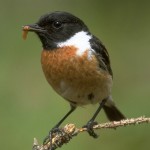
Following a prolonged, severe cold period during the second half winter 2009-10, it was obvious that many small birds had suffered a heavy casualty rate. Most inland pairs of Stonechats were wiped out and, based on evidence gathered so far, many of the coastal pairs suffered a similar fate. This kind of thing has happened before, and the species will, doubtless,bounce back. However, it would be useful to know just how bad the situation is prior to the recovery.

I’d be really grateful if anyone with observations of single territorial males, or breeding pairs of Stonechats anywhere in Ayrshire this year could send their records to me (please include the site name and, if possible, a grid reference) before mid November. I’m hoping to write up a short note in the SOC Ayr Branch Newsletter outlining the current breeding status of our county bird. The deadline for inclusion in the newsletter is late November.

Ardrossan to Brodick “Pelagic”

Location and Access

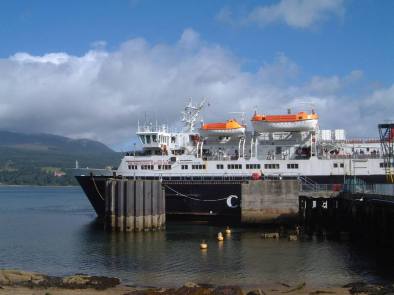
The Calmac ferry to the Isle of Arran goes between Ardrossan and Brodick and offers the chance to see birds out in the Firth of Clyde on a trip that takes just under an hour each way. The ferry is big and only gets bumpy in really bad weather. There is outdoor seating on various decks for observing (it is even possible to look out of the windows in the cafeteria and observation lounge:-).

On Saturdays during July and August the North Ayrshire branch of the RSPB have a stand at the rear of the ship to show passengers the wildlife en route (and do a very successful RSPB recruitment!).

Ferry is equipped with lift to transport wheelchair users from car deck to upper deck.
Birds

As the boat leaves Ardrossan harbour you get a decent view of Horse Island (NS213427). This is an RSPB reserve with a large colony of Eider and Lesser Black-backed Gull, with Cormorant, Shag and Greylag Goose. There is no access to the island, so the ferry makes a good vantage point. Ardrossan Harbour is also a good location for seeing Black Guillemot at close range.

When in mid-firth the birds to look out for include Manx Shearwater and Storm Petrel (especially in autumn), Gannet (on fishing trips from Ailsa Craig), Fulmar, the three commoner species of Diver.

As the ferry approaches Brodick you pass the refuse tip with its attendant gulls. In winter these are obviously worth scanning for white-winged gulls such as Glaucous and Iceland.

The ferry is also good for other marine wildlife: e.g. porpoise, Atlantic grey seal, common seal, Minke whale. The Firth is also important for the enigmatic Basking Shark.

Additional Information

For more general information on Arran (e.g. ferry details) please see the Arran page.

Shewalton Area

Location and Access

This part of south Irvine is actually a collection of six areas good for wildlife all within two kilometres of each other. These are mostly managed by the Scottish Wildlife Trust. For convenience they can be split into two groups which we’ll call North and South.

North Shewalton

For this group it is recommended you park in the small reserve layby just off the A737 at NS 26 70: heading north into Irvine from the Shewalton junction of the A78 it is on the right just after Shewalton Cemetery.

Area One: Shewalton Sandpits

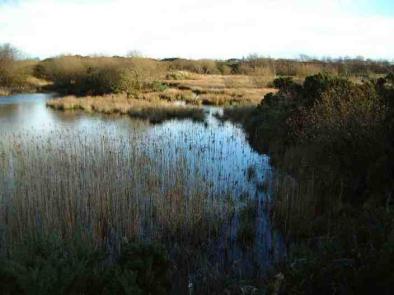
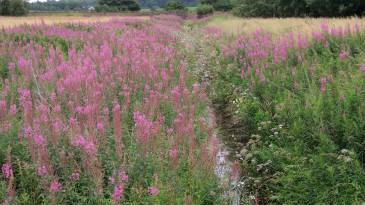
From the layby go down the path to the reserve. There are a couple of ponds surrounded by scrub and reeds. This area was reclaimed from disused sand and gravel works. It is particularly interesting for plants and butterflies. Extensive work done by the SWT in 2009-10 has restored this area, especially the ponds and cleared the network of paths. These go round the ponds and over to the River Irvine.
Area Two: Trocol Pond

From the layby walk back and cross the A737 and enter the area via a gate at NS 25 71. A circular path goes round a pond with stretches of wood, gorse and scrub. The pond has Coot, Moorhen and breeding Mute Swan. In winter it also attracts Whooper Swan. The trees (a mixture of conifer and deciduous) support Siskin, various tits, finches and the commoner summer migrants.

South Shewalton

The second group is on the other side of the A78. For this group it is recommended you park in the small SWT reserve car park near the paper factory at NS 7 57. From the Meadowhead Roundabout head towards the paper factory and pass the water treatment works on the left, after which a small track on the left goes down to the car park. This is on National Cycle Route 7.

Area Three: Shewalton Woods

From the car park follow the cycle path to start a circular walk that would take roughly an hour. Almost immediately take a track on the left and follow a water pipeline to some ponds at NS 49 61. The ponds and surrounding scrub have Grasshopper Warbler, Whitethroat, Reed Bunting and Sedge Warbler in summer, and the adjacent fields have Whooper Swans, Teal, Redwing and Fieldfares in winter. Map 

The path continues and enters a section of birch woodland which has Coal Tit, Goldcrest, Long-tailed Tit, Siskin, Great Spotted Woodpecker, and Redpoll. You emerge from the trees into a large expanse of rough grassland on the former raised bog, remnants of which persist close to the capped landfill site in the centre of, but not officially part of, the reserve. Buzzards breed and Hen Harrier is a winter visitor over the Moss. Foxes and Roe Deer are commonly seen. Keep your eyes peeled for adders basking on the edge of the path. The Moss is where I always get the first singing Skylark of the spring.

The path continues along the side of the Troon-Kilmarnock railway line (still in use, though only occasional trains pass) and rejoins the National Cycle Route at the south end of the paper factory. The trees here have Woodcock as well as the usual suspects. In 2009 15 hectares of conifer circling the reserve were felled to convert the area to native broad-leaved woodland. This is rapidly being colonised with wild flowers, and native tree species. A project The Shewalton Wood Tree Nursery is underway to provide a source of trees grown from seeds of Ayrshire provenance for use in local reserves.

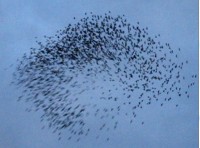
In winter at dusk it is worth visiting the paper factory carpark to watch the roosting Starling flocks come in. These often attract Sparrowhawks which adds to the excitement!

Area Four: Meadowhead Pit

From the car park walk back towards Meadowhead Roundabout and opposite the pumping station (NS 6 59) take the cycle path to the left (signposted to Irvine Station). After about 200m the flooded pit appears on the right (NS 3 63). Gulls rest here after a busy scavenge in the local tip. Cormorant, Coot and Little Grebe all breed. In winter ducks such as Tufted Duck, Scaup, Pochard, Goldeneye are common as well as occasional visitors such as Goosander and Long-tailed Duck and swans (Mute, Whooper and even Black!).

Area Five: Gailes Marsh

By continuing along the cycle path from Area Four a foot bridge crosses the A78 and emerges at a busy minor road. Cross this and turn right towards the mini-roundabout. Continue along the cycle path as it heads left. After 400m on the left is Gailes Marsh: another SWT reserve. It is also possible to park on the grass verge at the edge of the reserve near the water pumping building.

Cross the style to enter the reserve which comprises coastal grassland, open water, marsh and woodland combine that supports a diversity of plant and animal life. It is particularly important for plants, amphibians and butterflies (work to re-introduce the Small Blue started in 2010).

In 2010 an artificial Sand Martin colony was constructed at the south of the reserve. This proved to be an immediate hit with 15-20 pairs moving in that spring.

Area Six: Oldhall Ponds

It is easy to overlook this SWT reserve as it hides away in the area north-west of the Meadowhead roundabout on the B7080. It consists of a couple of ponds connected by a path leading to a viewpoint. Although not a major attraction on its own, when combined with the other sites in this group, it nicely rounds off a visit. Parking is a little tricky as this road is busy: the best idea is to park nearer the paper factory and walk. Map of boundary 

The ponds attract the usual waterfowl including Whooper Swan in winter, and Kingfisher. The scrub area is also good for the usual summer migrants.

Culzean

Location and Access

Culzean Country Park is the most popular National Trust for Scotland (NTS) property attracting 200,000 visitors annually. It is situated on the Firth of Clyde, 19 km south of Ayr on the A719, 6 km west of Maybole, off the A77. There is a range of visitor facilities including car parking, refreshment points, exhibitions, information and toilets. The main areas of the Park are accessible for disabled visitors. Ranger-led walks can be booked for groups and an events programme is available from Easter to the end of September.

A regular bus service to Maidens passes the entrance. An approach bycycle along A719 is feasible, though particular care should be exercised when tourist traffic is at a peak.

Please note that there is an admission charge between mid-March and the end of October for people who are not members of the NTS.

< Several car parks throughout park. Woodland: partially accessible by wheelchair along main paths, uneven surface in places, ramp to hide at Swan Pond.

A719 approach needs care, but cycling is good within the grounds.
Status

Culzean is a typical Scottish lowland estate covering around 600 acres. Its heritage status is due to the exceptional designed landscape and Robert Adam’s magnificent clifftop castle. In addition to the fifty traditional buildings, Culzean has mixed mature woodland, 130 acres of farmland, two major gardens, freshwater ponds and five kilometres of coastline. The sandy bays, rocky shoreline and hundred foot cliffs are part of the Maidens to Dunure Site of Special Scientific Interest, the best example of coastal deciduous woodland in Southern Scotland. Following a survey by the Scottish Wildlife Trust’s wildlife sites team the Country Park was confirmed as a Listed Wildlife Site because of its significant wildlife interest.

Birds

The combination of mixed woodland in a coastal setting provides a wide range of habitats and a resultant healthy bird list of 110 to 120 species annually of which around 50 breed.

Woodland

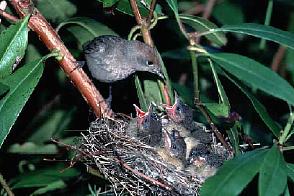
From April to June the main woodland interest is the breeding warblers with around 100 pairs breeding annually. Blackcap, Chiffchaff and Willow Warbler are common with smaller number of Garden Warbler, Whitethroat, Grasshopper and Sedge Warbler and occasionally Wood Warbler. Other breeding birds of note are Barn Owl, Kestrel, Sparrowhawk, Tawny Owl, Stock Dove, Great Spotted Woodpecker, Bullfinch, Goldfinch and Siskin. Several kilometres of pathway are kept open throughout the woodland and patience is very often rewarded. In winter the shelter of the woodland is a haven for Redwing and Woodcock during severe weather. Mixed flocks of Goldcrest, Long-tailed, Coal, Great and Blue Tits are a winter feature often numbering 80-100 birds.
Buildings

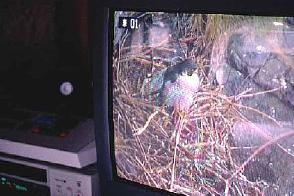
Swift use the nest boxes on the main buildings, House Martin have recently recolonised and the Swallow population is at saturation point, especially in the Walled Garden where every available nest site is used. Live images of one pair of nesting swifts in the exhibition loft have been relayed back to the information area and, although it is early days, we hope to improve the quality and that this will become an annual event.

Coastline

Another camera has been installed on the Castle cliffs and this has proved productive in recording Raven breeding, the daily life on the Fulmar colony (not spectacular!) and Peregrine Falcon nest prospecting. The Ravens and Peregrines are regularly seen in the air around the Castle. The coastal dimension is obviously a very important part of Culzean and the cliff walk has several locations which are ideal for sea watching, species varying with the season. Gannet and auks from Ailsa Craig can be seen in spring and summer while divers, grebes and the occasional influx of Manx Shearwater brighten up the winter scene.

Swan Pond

The Swan Pond is probably more interesting in winter rather than spring and summer due to the build up of overwintering duck. Pochard, Tufted Duck and Goldeneye swell the numbers, though Mallard are still the commonest. You never know what to expect and in rough weather species more usually seen at sea, such asLong-tailed Duck, may put in an appearance and there are regular records of Gadwall, Pintail and Smew. Winter numbers of Little Grebe have recently built up to around 20. Look out for Heron roosting in the field adjacent to the Swan Pond car park, 19 is the highest count so far.

Spring at the Swan Pond is virtually a battlefield as numerous pairs of Mute Swan attempt to secure nesting territories. At least pairs eventually settle and build and one pair uses a quiet cove on the coast. Little Grebe, Water Rail and Tufted Duck are around all the time and the arrival of Lesser Black-backed Gull usually announces the broods of Mallard chicks being brought to the pond from their woodland nests.

Bird Checklist

Status as at February 2001 and including historical data.

Red-throated Diver Partridge Swift Jackdaw
Black-throated Diver Pheasant Kingfisher Rook
GreatNorthern Diver Water Rail Great Spotted Woodpecker Carrion Crow
LittleGrebe Corncrake Raven Chough
Great Crested Grebe Moorhen Skylark Starling
Red-necked Grebe Coot Sand Martin House Sparrow
Slavonian Grebe Oystercatcher Swallow Tree Sparrow
Fulmar Ringed Plover House Martin Chaffinch
Manx Shearwater Golden Plover Tree Pipit Brambling
Gannet Grey Plover Meadow Pipit Greenfinch
Cormorant Lapwing Rock Pipit Goldfinch
Shag Purple Sandpiper Grey Wagtail Siskin
Bittern Dunlin Blue-headed Wagtail Linnet
Little Bittern Snipe Pied Wagtail Twite
Grey Heron Woodcock Dipper Lesser Redpoll
Bewick Swan Whimbrel Wren Mealy Redpoll
Mute Swan Curlew Dunnock Crossbill
Whooper Swan Redshank Waxwing Bullfinch
Bean Swan Common Sandpiper Robin Yellowhammer
Pink-footed Goose Turnstone Redstart Reed Bunting
Greylag Goose Arctic Skua Stonechat Corn Bunting
Shelduck Black-headed Gull Wheatear
Wigeon Common Gull Ring Ouzel
Gadwall Lesser Black-backed Gull Blackbird
Teal Herring Gull Fieldfare
Mallard Glaucous Gull Song Thrush
Pintail Great Black-backed Gull Redwing
Garganey Kittiwake Mistle Thrush
Shoveler Sandwich Tern Grasshopper Warbler
Pochard Common Tern Sedge Warbler
Tufted Duck Arctic Tern Lesser Whitethroat
Scaup Little Tern Whitethroat
Eider Guillemot Blackcap
Long-tailed Duck Razorbill Garden Warbler
Common Scoter Black Guillemot Wood Warbler
Goldeneye Rock Dove Chiffchaff
Smew Stock Dove Willow Warbler
Red-breasted Merganser Woodpigeon Goldcrest
Goosander Collared Dove Spotted Flycatcher
Hen Harrier Feral Pigeon Pied Flycatcher
Goshawk Cuckoo Long-tailed Tit
Sparrowhawk Barn Owl Willow Tit
Buzzard Tawny Owl Coal Tit
Osprey Long-eared Owl Blue Tit
Kestrel Short-eared Owl Great Tit
Merlin Nightjar Treecreeper
Peregrine Falcon Jay
Magpie

Additional Information

For further information please contact:

The Ranger Service
The Visitor Centre
Culzean Country Park
Maybole
Ayrshire
KA19 8LE
Phone:
01655 884400
Fax:
01655 884522
Web:
www.nts.org.uk

Contents of 2000 Report

  • Ailsa Craig – Before and After the Eradication of Rats in 1991 by Bernie Zonfrillo
  • The Kestrel in Ayrshire 2000 by Gordon Riddle
  • Wetland Bird Survey (WeBS) in Ayrshire by Kevin Waite
  • Chronological Summary by Angus Hogg
  • Systematic List

Contents of 2001 Report

  • The Birds of Turnberry by Angus Hogg
  • The Kestrel in Ayrshire 2001 by Gordon Riddle
  • That Redhead’s No Lady by Dave Grant
  • Quarter Century of the Ayrshire Bird Report by Kevin Waite
  • Ringing in Ayrshire by Dave Grant
  • Chronological Summary by Angus Hogg
  • Systematic List

Contents of 2002 Report

  • Park Life: the Birds of an Urban Country Park by Mark Ruggeri
  • The Kestrel in Ayrshire 2002 by Gordon Riddle
  • Sparrowhawk Breeding Details 2002 by Ian Todd
  • Late Season Breeding Ravens by Dave Grant
  • Mute Swan Survey 2002 by Jim Thomson
  • Migrant Arrival Dates by Kevin Waite
  • Chronological Summary by Angus Hogg
  • Systematic List

Contents of 2003 Report

  • Lady Isle – Britain’s First Seabird Reserve by Dave Grant
  • The Kestrel in Ayrshire 2003 by Gordon Riddle
  • Sparrowhawk Breeding Details 2003 by Ian Todd
  • Chronological Summary by Angus Hogg
  • Systematic List
  • Ayrshire Butterfly Report 2003 compiled by Nicola Macintyre

Contents of 2004 Report

  • The Lesser Whitethroat in Ayrshire by Tom Byars
  • Wood Nuthatch Nesting in Ayrshire by Angela & Roger Hissett
  • The Kestrel in Ayrshire 2004 by Gordon Riddle
  • Sparrowhawk Breeding Details 2004 by Ian Todd
  • Chronological Summary by Angus Hogg
  • Systematic List
  • Ayrshire Butterfly Report 2004 compiled by Nicola Macintyre