Following on from my article relating to an update of the Birds of New Cumnock Parish by JA Begg (Howes 2025). I have been able to glean information about the historical distribution of certain breeding species in the New Cumnock area, adding to it with census results and up-to-date information from recent windfarm development surveys.
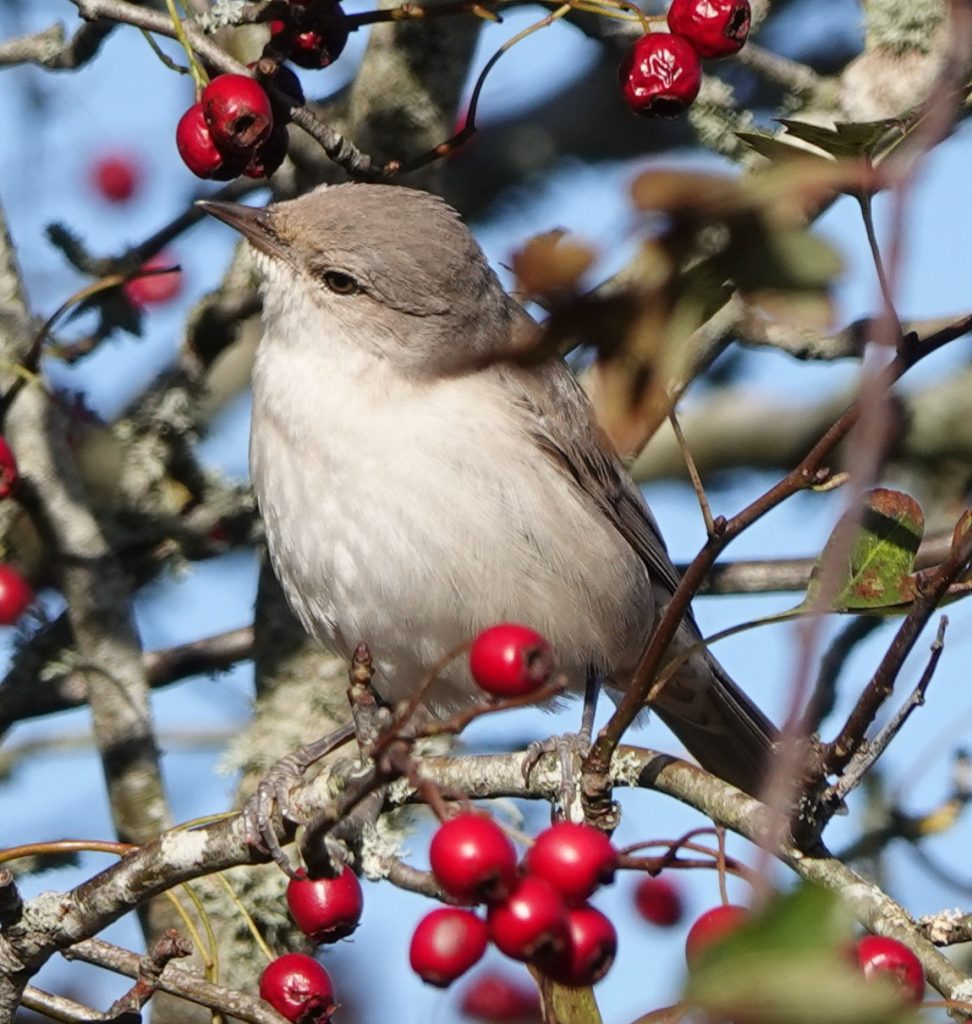
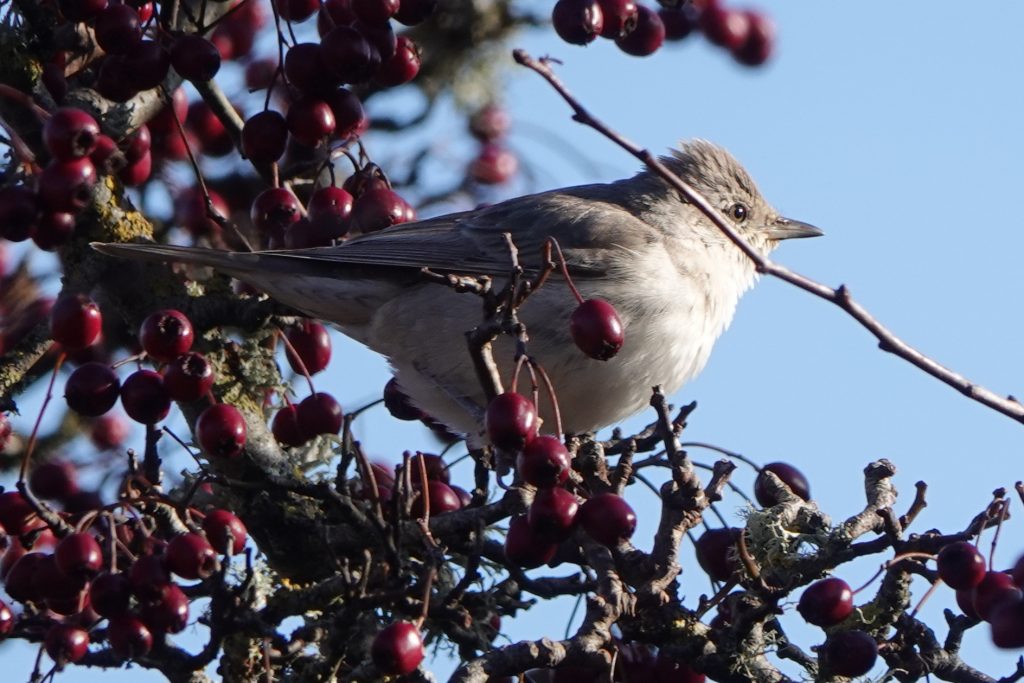
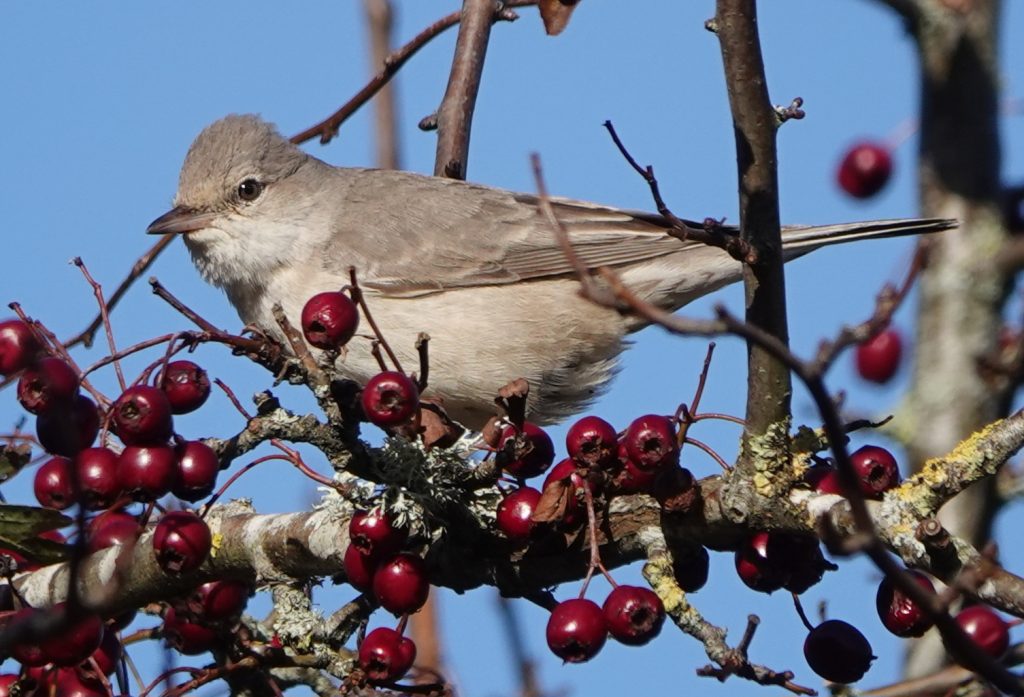
I had started birding from Greenan Shore car park with the intention of working south towards Deil`s Dyke, checking the scrub and beach for migrants. Most thickets and Hawthorns held birds: Chaffinches, Stonechats, Greenfinches, Yellowhammers, Dunnocks, Tits and Thrushes were abundant. At the southern end of the field, a little-used, overgrown trail through the thickest, darkest scrub leads to the beach. Several metres into the scrub and creeping through very slowly, watching for any movement within, a pair of Chaffinches and a Song Thrush were feeding in a Hawthorn when another bird came into view from the shadows and into a shaft of sunlight. Initially, from its size and colouration, I thought female Chaffinch with my views from the rear beneath but as it presented a side profile, I could see it certainly was not. Slightly larger than the nearby Chaffinches, it was a pale greyish-beige below and grey/brown above. In the sunlight, a yellowy/brown iris showed well in a dark eye and with a hint of a crest on the scruffy head and a long, strong bi-coloured pointed bill, the overall impression was of a large, fierce-looking Warbler. Realising it was something out of the ordinary, I managed to acquire several quick record shots. The eye colour, bill size, head shape and colouration discounted Garden Warbler and Blackcap, but on quickly inspecting the record shots, I noticed chevron-like barring on the undertail coverts which I had not noticed through binoculars. This diagnostic feature I remembered from reading finders reports and field guides on autumn/first winter Barred Warblers, and also that it was a ponderous, slow-moving Warbler, a trait it was living up to as it clambered about the Hawthorns feeding. Identification clinched in my mind, I posted images quickly online and received corroborating messages of congratulations on a first Ayrshire record.
Hayden Fripp, October 2025
Editor note: links to the full versions of the above images and others are in the Photo Gallery and the Ayrshire Bird List pages.
You might have noticed in the Ayrshire Rarities List a mention of a dead Great Bustard from 1895 washed up on Irvine beach: our only, and probably last, sighting of this species. I had a dim recollection of this bird making its way to the Dick Institute in Kilmarnock, so with nothing better to do, I decided to see if they still had it.
The publication of Birds of New Cumnock Parish by James ‘Jimmy’ Begg in 2010 was a welcome addition to Ayrshire birding literature. Being of the ‘old school’ I always enjoy reading small pamphlets and books that cover local birdwatching. These often include insights about changes to bird distribution, populations, breeding ranges and habitats not always easily included in larger, more general reports.
Arriving in Ayrshire in 1969, with a somewhat vague interest in birds, my move to Crosshill in 1970 took me into an area which I quickly realised was home to a rich diversity of wildlife and, more particularly, birdlife. I could see and hear all sorts of farmland species from my house, from secretive Spotted Flycatchers breeding in the garden, to jingling Corn Buntings at nearby Garpin Farm. However, I soon became aware of a rather special location which I could watch from a minor road (B7045) between Kirkmichael and Minishant – Blairbowie.
Any sighting of the diminutive European Storm Petrel is a delight in itself and this year in particular has been a bumper year for Ayrshire sightings. My personal tally of sightings whilst sea watching from my favoured spot at Dunure between 23rd May and 30th August is 46 birds with a high count of 15 on 28th June including a flock of ten birds at one point in my scope view. Viewing from Dunure with its height above sea level definitely gives an advantage to seeing Storm Petrels.
Recently I was looking through the web-site of the Ayrshire Archaeological and Natural History Society and came across a number of documents published by the Society about birds in Ayrshire stretching back to 1948. I thought these might be of interest to readers of this site and so, with kind permission of the Society, I have included links to them below. Note, these are pretty big PDF documents.
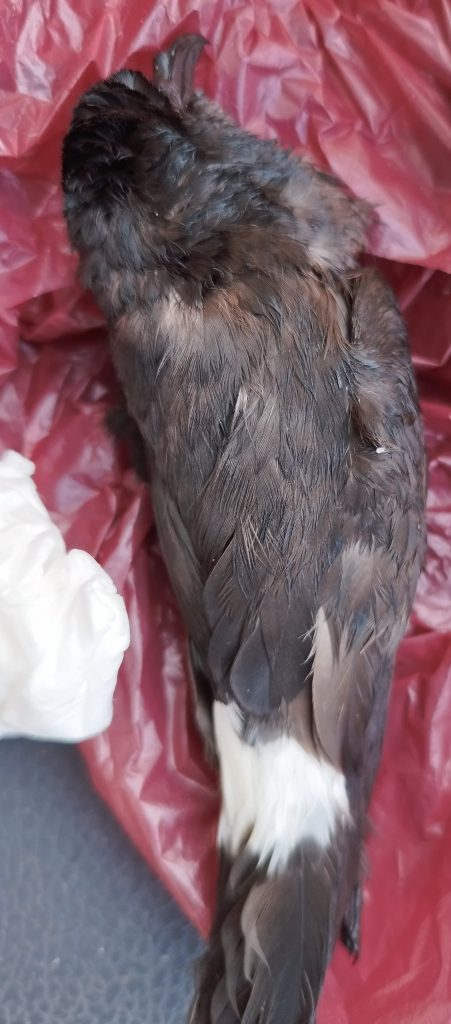
I recently bumped into a fellow dog-walker, Vivienne Glew and her dog Baillie, who told me that she had recovered a moribund Storm Petrel that had dropped into the sea near Irvine harbour mouth. While the bird didn’t last long, Vivienne did notice that it was ringed. She sent the details off to the Natural History Museum and the BTO returned the following ringing info:
Ringing Scheme: London Ring Number: 2694931 Species of bird: Storm Petrel (Hydrobates pelagicus)
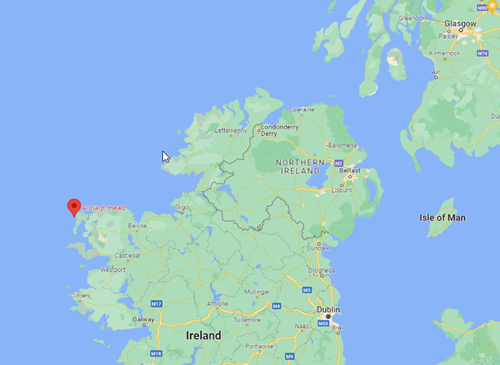
This bird was ringed by D Manley as age at least 1 year, sex unknown on 12-Aug-2015 00:30:00 at Annagh Head, Bellmullet, Mayo, Ireland (54deg 14min N -10deg -7min W). It was found 2883 days after it was ringed, 379 km from the ringing site, direction ENE.
My thanks to Vivienne and Baillie for such an interesting chat.
The possibility of Green Sandpipers over-wintering in South Scotland had occurred to a few Ayrshire birders during the 1970s, with the pattern of increasingly regular winter sightings suggesting the same birds returning each year to specific locations within the county. Although primarily an autumn migrant, there were only 5 records of the species prior to the 1960s according to Richards’ Checklist of Ayrshire Birds (1966). Had they simply gone undetected?
Like many bird species in the UK, Bewick’s Swan has become much scarcer as a winter visitor. This is partly due to a decline in its world population, and also because of changing patterns of migration. During the 1970s, autumn passage and over-wintering of Bewick’s Swans in Scotland was regular, with birds often stopping off on islands like Islay, these birds heading to their winter quarters in Ireland. During the period of October-December, some would occasionally drop in at well-watched Ayrshire localities such as Shewalton Sandpits.
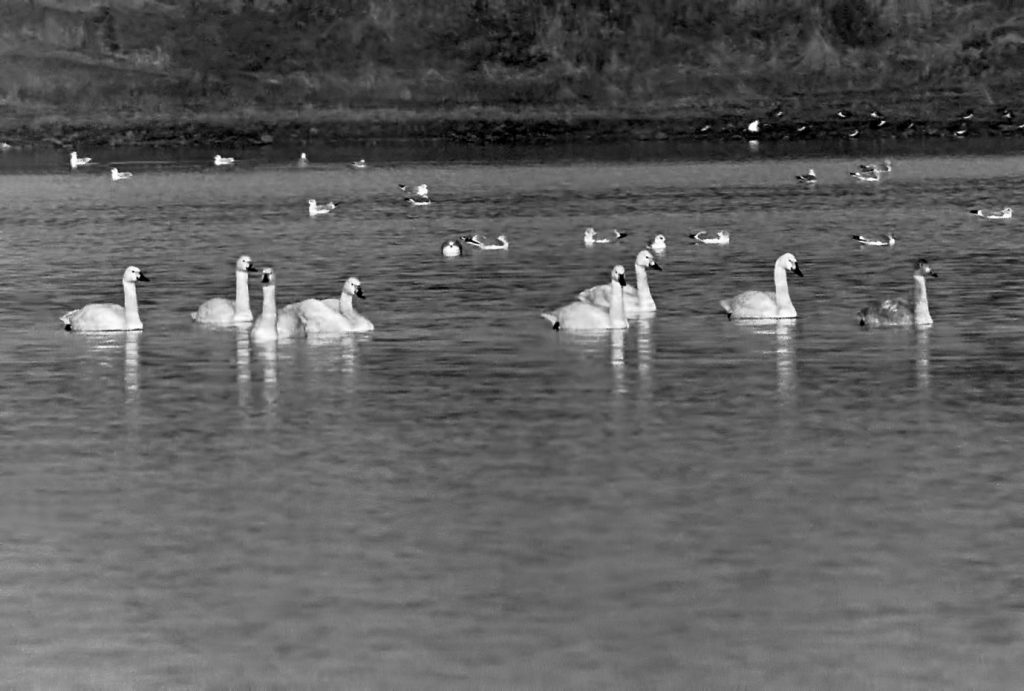
8 of a party of 12 Bewick’s Swans at Shewalton in December 1978 (Angus Hogg)Continue reading →