M Howes
January 2026
Following on from my article relating to an update of the Birds of New Cumnock Parish by JA Begg (Howes 2025). I have been able to glean information about the historical distribution of certain breeding species in the New Cumnock area, adding to it with census results and up-to-date information from recent windfarm development surveys.
The historical data, some of it published in census results, and some of it anecdotal, is supported by additional information from Ayrshire SOC reports.
Using my knowledge of the area, I have tweaked the data where I think appropriate, but wherever possible, I have resisted the temptation to assume or speculate.
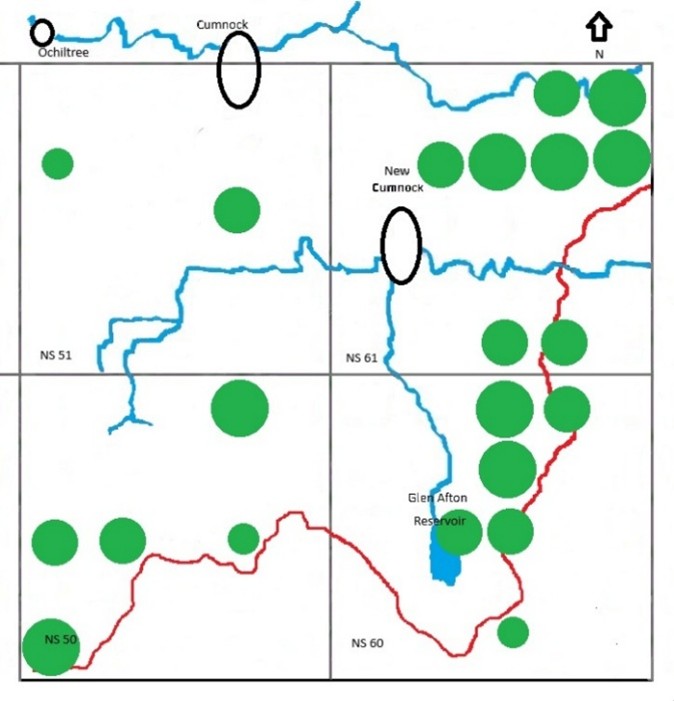
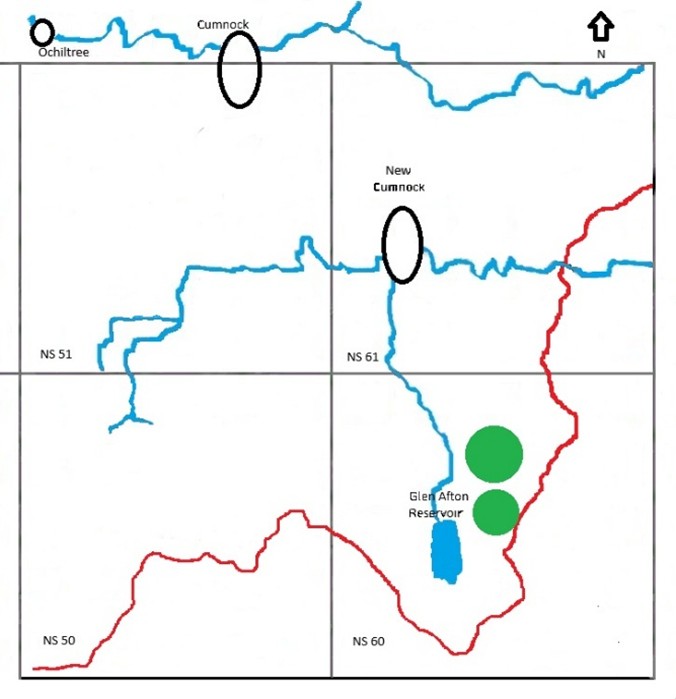
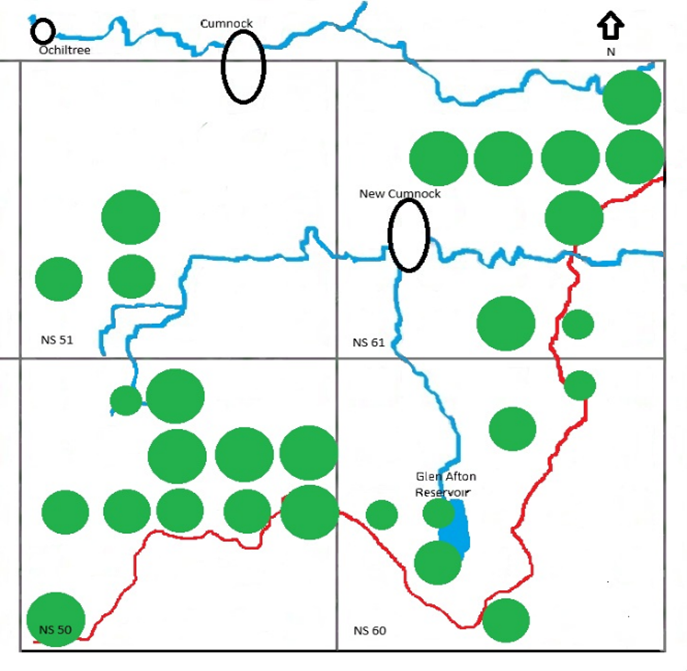
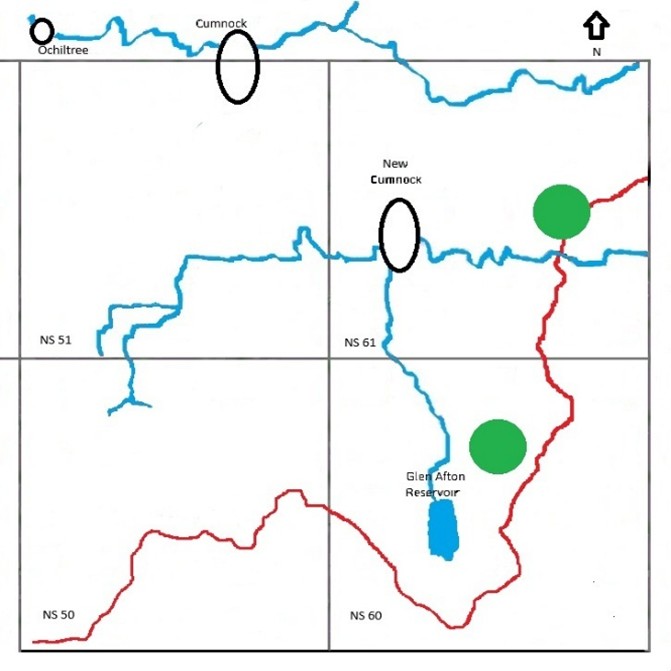
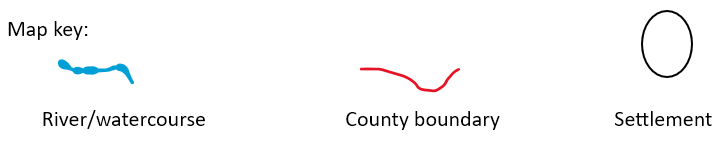
To illustrate the changes that have taken place in the New Cumnock area over the last 14 years, I concentrate here on upland species which have seen serious declines. The examples I have chosen for breeding distribution mapping are Red Grouse, Black Grouse, Lapwing, Golden Plover and Redshank. Sufficient data exists for these species to produce the following maps. Large green dots represent probable breeding, medium dots possible breeding/present in suitable habitat. and small dots represent a single isolated record. These dots are placed within 2km terads.

European Golden Plover (Pluvialis apricaria)
Common Redshank (Tringa totanus)
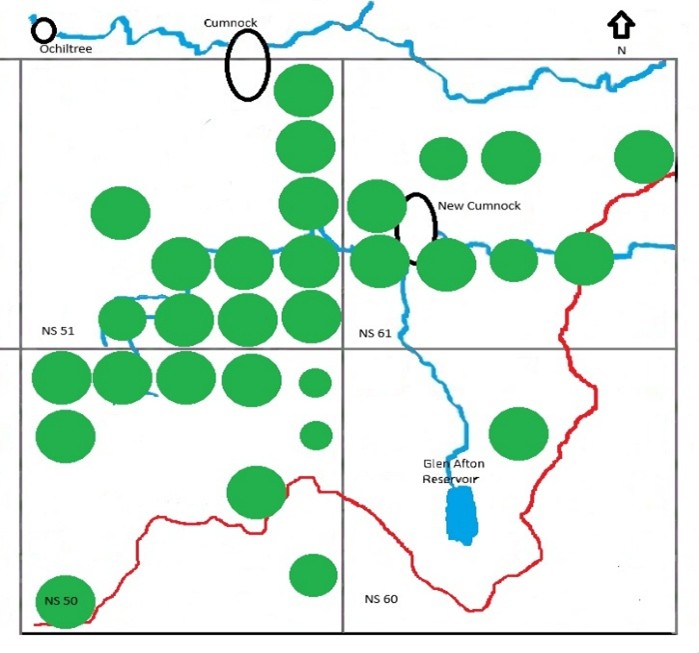
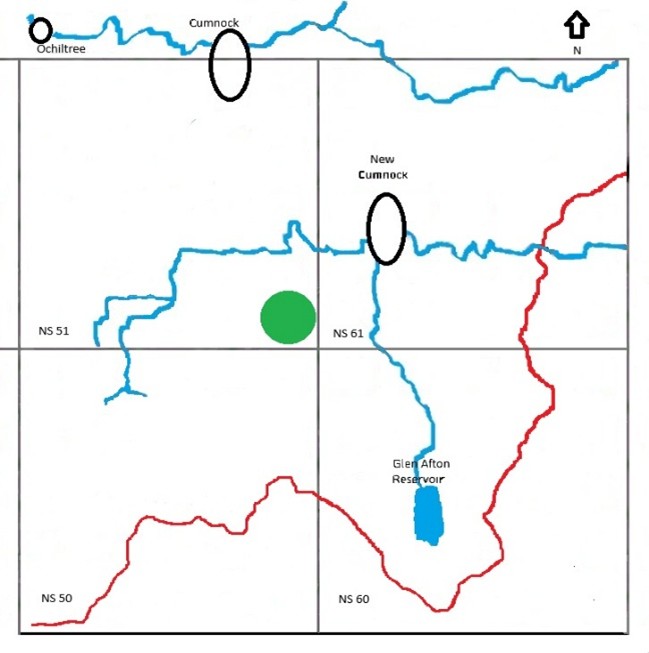
Red Grouse (Lagopus scotica)
Northern Lapwing (Vanellus vanellus)
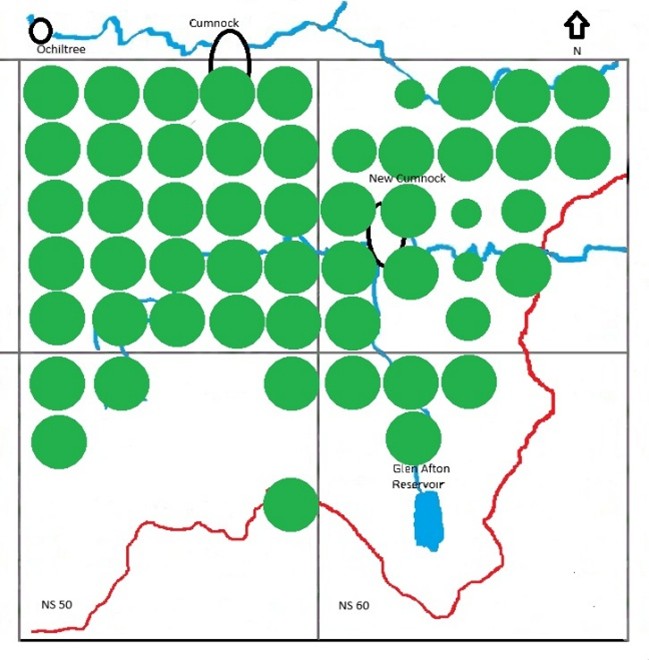
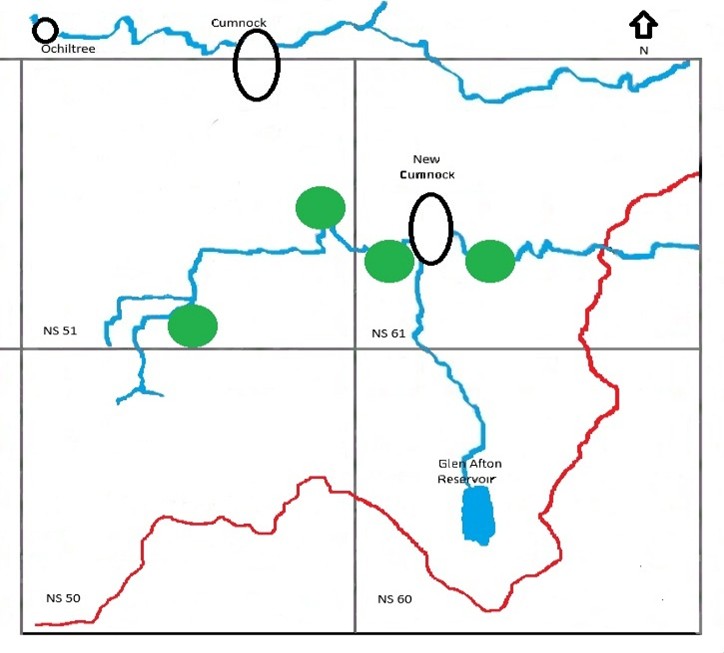
Black Grouse (Tetrao tetrix)
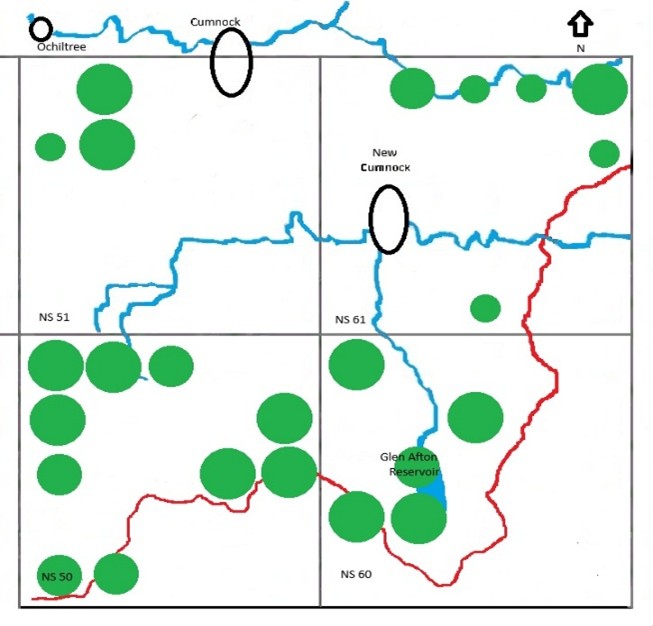
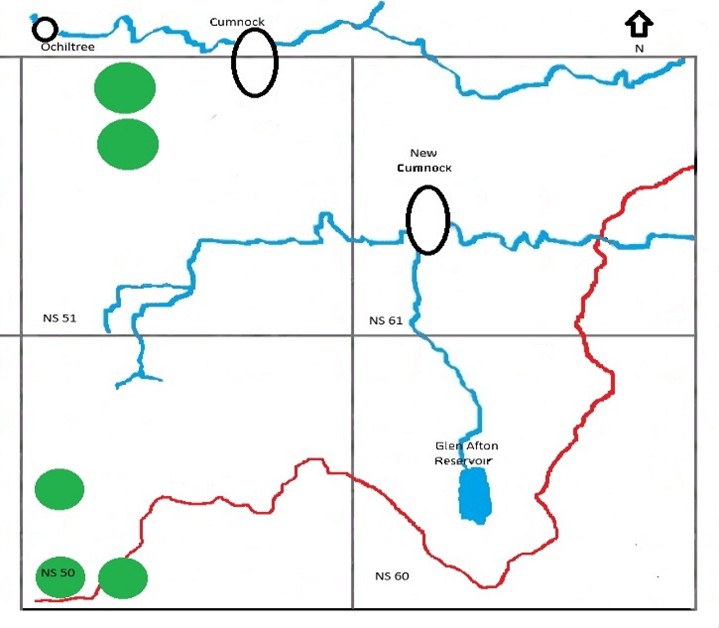
The maps speak for themselves. Latest information (2025) for Black Grouse suggests this species is now extinct as a breeder in the New Cumnock area. Individual birds are occasionally encountered, but no positive lekking sites have been reported. Redshank, Lapwing and Red Grouse cling on, but predation appears to be taking a heavy toll on these species. Gulls and Corvids are prime suspects, but increases in Fox and Badger populations have also been cited in Wind Farm EIA reports.
The breeding distribution of the once common Curlew is interesting. Now much reduced in numbers, birds are widely encountered during the breeding season, but breeding success is largely unknown.
Closely monitored species such as the Hen Harrier are regular in small numbers in winter but, along with the Short-eared Owl, are almost certainly extinct as a breeder.
The reasons for the changes in breeding status around New Cumnock appear to be a combination of:
- Afforestation of open moorland with the consequent disturbance from access roads and management.
- Changes to agricultural land management, including both overgrazing and undergrazing, drainage, improvement of marginal and pasture land, and changes to predator control.
- Large-scale surface mining of coal seams underlying moorland and peat bogs. The infrastructure associated with such mines also requires considerable land area. While the effect of drainage on remaining areas is a problem, incomplete or poor restoration leaves large areas impoverished.
- The march of the windfarms is now relentless, affecting forested areas as well as undeveloped moorland. Here also, the disturbance caused by construction and the need for easy access can make the situation worse.
- There is undoubtedly an issue relating to climate change. Extensive research has highlighted changes to habitats that can be attributed to changes in rainfall and temperature. Several studies have directly related climate change to patterns of bird behaviour and breeding, with consequent reduction in food availability posing a problem for specialist feeders. It may be that with all the other pressures, climate change is now radically tipping the balance.
The status of passerine species around New Cumnock is more difficult to assess. Whilst historical records are of great interest, they rarely quantify changes, often being just comments and observations. Within the New Cumnock area, Wood Warbler, Pied Flycatcher, Whinchat and Willow Tit have become much rarer as borne out by frequency of observation. Some formerly common birds in the area, such as Yellowhammer and Tree Sparrow, seem to have undergone range restriction, possibly due to changes in agricultural practice. Whilst other species, such as the Goldfinch, have shown a clear increase. Although there have been undoubted habitat changes, other factors, such as those encountered on migration and in wintering grounds, may be at play.
As some breeding species decline, the New Cumnock area has seen the establishment of newcomers, notably Nuthatch, Red Kite, Osprey and Goshawk. Historical observations indicate that the populations of Buzzard, Magpie and Carrion Crow are clearly larger than in Jimmy Begg’s early days!
The overall picture on balance, is not a good one. We have yet to see the full impact of climate change. and further loss of prime habitat continues. The forthcoming British Breeding Bird Census will, hopefully, provide the opportunity to more accurately assess the current situation.
References
- Ayrshire Bird Reports, SOC.
- Begg JA. (2010) Birds of the New Cumnock Parish and Knockshinnoch Lagoons, 1959-2010. Scottish Wildlife Trust.
- British Breeding Bird Surveys 1968-2011, British Trust for Ornithology.
- EIA’s for the following windfarms: Hare Hill, Afton, Pencloe, Lethans, Enoch Hill, Overhill, Greenburn, Hare Hill, Blackwood, Breezy Hill.
- Hogg A. et al. (1997) Ayrshire breeding birds Atlas 1991-1997.
- Howes M. (2025) Birds of New Cumnock Parish- an update 2010-2024.
- Scottish Raptor Monitoring Scheme reports.
- Whitehead S, Hesford N and Baines D (2018) Changes in abundance of some ground nesting birds on moorland in south-west Scotland. Game Conservancy.